
If you’re looking for a fun and easy activity that combines creativity, science, and a splash of magic, the Rainbow Rain Cloud in a Jar is the perfect project. Using just a few simple household items, kids can explore how rain works while making a beautiful storm of color in a jar. It’s part experiment, part art, and entirely captivating!
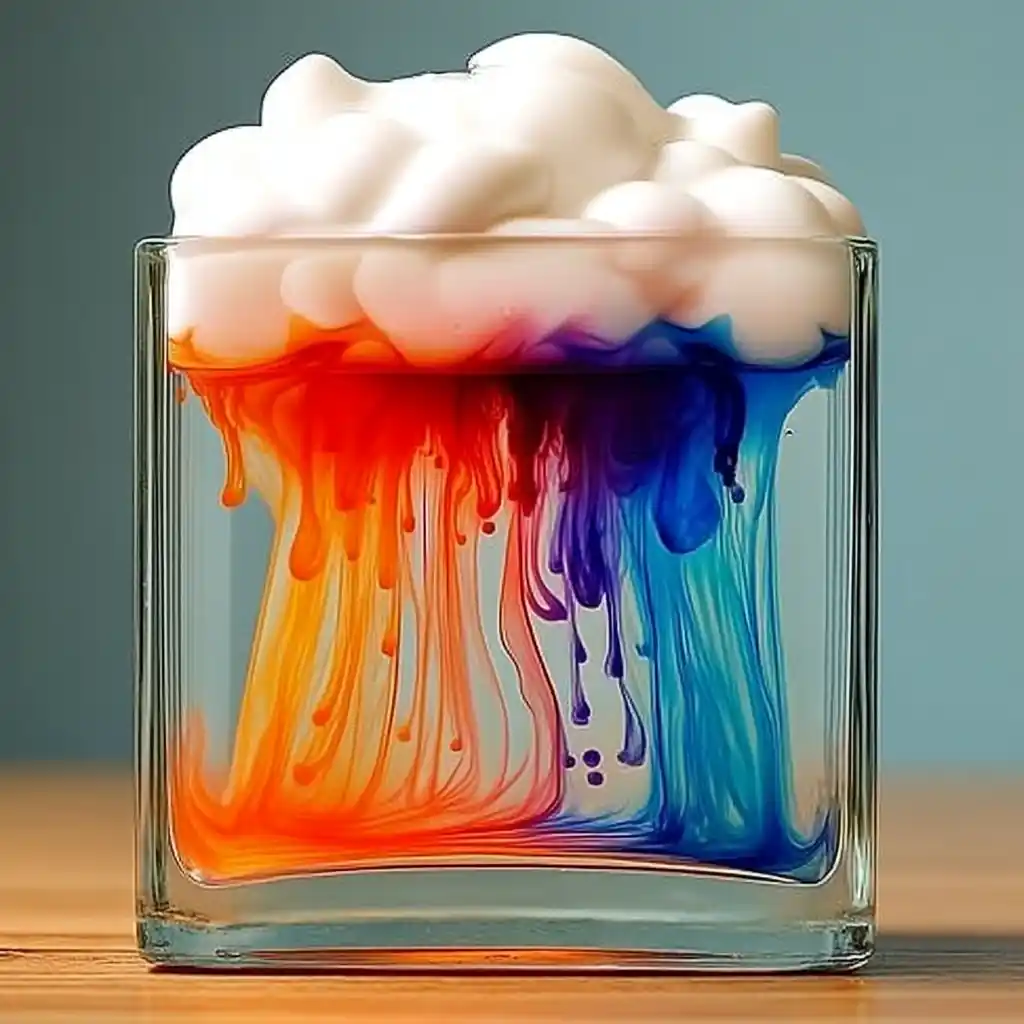
Whether you’re teaching weather patterns or just need a screen-free activity on a rainy day, this project will engage curious minds and encourage hands-on discovery.
The Magic Behind the Rainbow Rain Cloud
What Is a Rain Cloud in a Jar?
A rain cloud in a jar is a simple and visual science experiment that simulates how real rain clouds form and release precipitation. The water in the jar acts as the atmosphere, the shaving cream mimics a fluffy cumulus cloud, and the food coloring represents rain. As the colored water slowly drips through the shaving cream, it mimics how moisture builds up in real clouds until it eventually falls as rain.
This experiment provides an easy and dramatic way to teach kids about basic weather science while allowing them to get creative with colors.
Why This Activity Is Perfect for Kids
- Hands-on learning: Encourages tactile interaction and observational skills.
- Creative expression: Kids get to mix colors and design their own “storms.”
- Scientific exploration: Demonstrates a basic weather phenomenon in a way that’s easy to understand.
- Minimal setup: Uses household items and takes just minutes to prepare.
This activity is especially ideal for younger children, ages 4 to 10, but older kids and adults often enjoy it just as much!
Let’s Get Started with Your Rainbow Rain Cloud
Ingredients (Materials Needed)
To create your very own rainbow storm in a jar, gather the following materials:
- 1 clear glass or wide-mouth jar (transparent for best visibility)
- Water (enough to fill about ¾ of the jar)
- Shaving cream (foam type only; avoid gel)
- Food coloring (a mix of red, orange, yellow, green, blue, purple)
- Small bowls or cups (one for each color)
- Droppers, pipettes, or small spoons
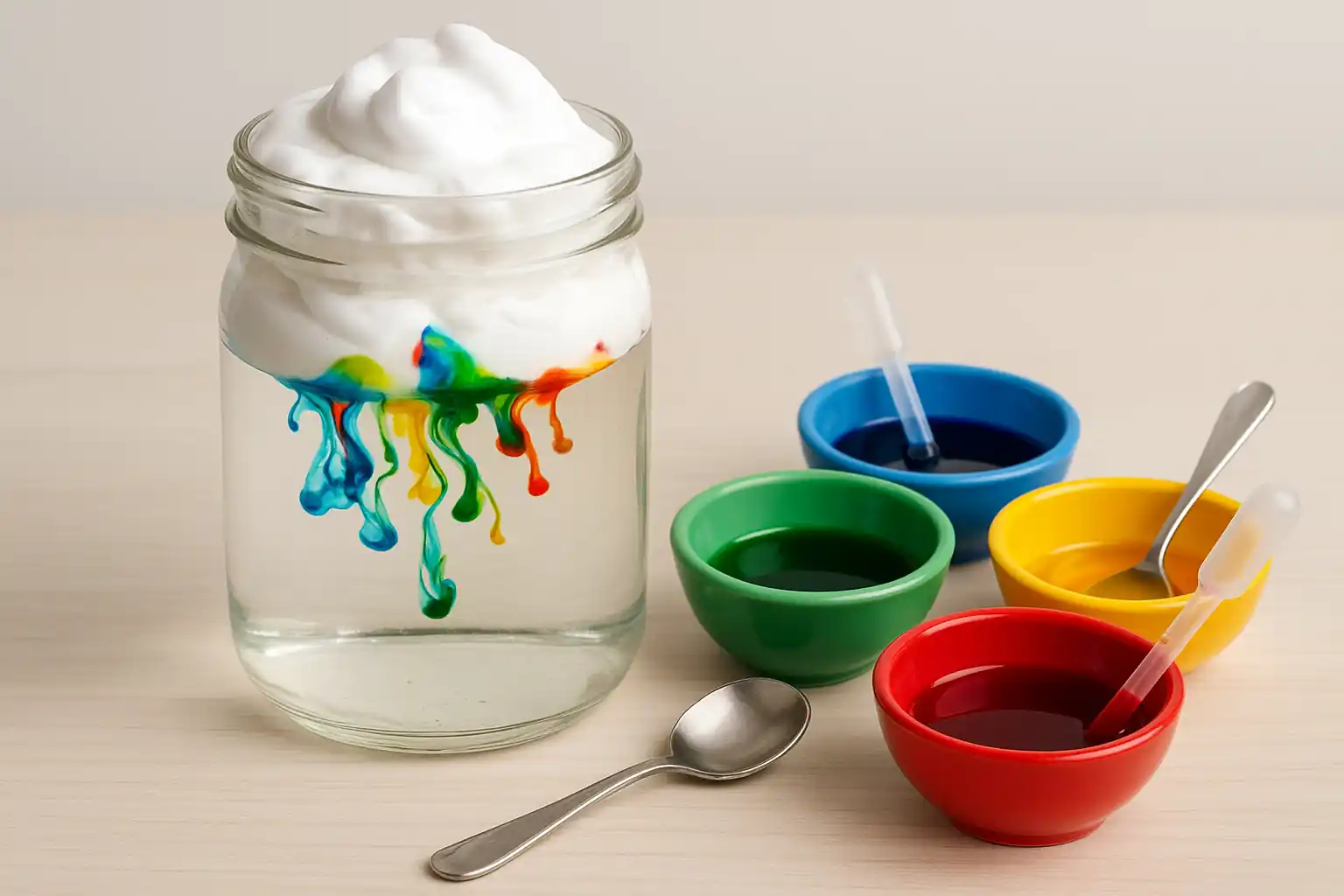
This setup makes it easy to observe how colors interact and rain through the “cloud,” and it allows each child to create their own unique version.
Directions
Follow these simple steps to build your colorful cloud scene:
- Fill the Jar
Pour water into the jar until it’s about three-quarters full. This represents the earth’s atmosphere. - Add the Cloud
Shake your shaving cream can and spray a generous, fluffy layer right on top of the water. This forms your “cloud.” Keep it light so it floats. - Prepare Your Rain Colors
In small bowls or cups, mix a few drops of each food coloring with a small amount of water. These mixtures will act as your raindrops. - Make It Rain
Use a dropper or spoon to gently place drops of colored water on top of the shaving cream. Try spacing the colors out across different sections of the cloud. - Watch the Storm Unfold
Slowly, the colored droplets will begin to push through the shaving cream, dripping down into the clear water below. The effect? A mesmerizing, rainbow-like rainfall that twirls and swirls like a mini storm. - Experiment and Explore
Add more colors. Layer them. Try making patterns or blending shades. Each round gives a new and different result, making this a project you can revisit again and again.
Tips, Variations, and Learning Extensions
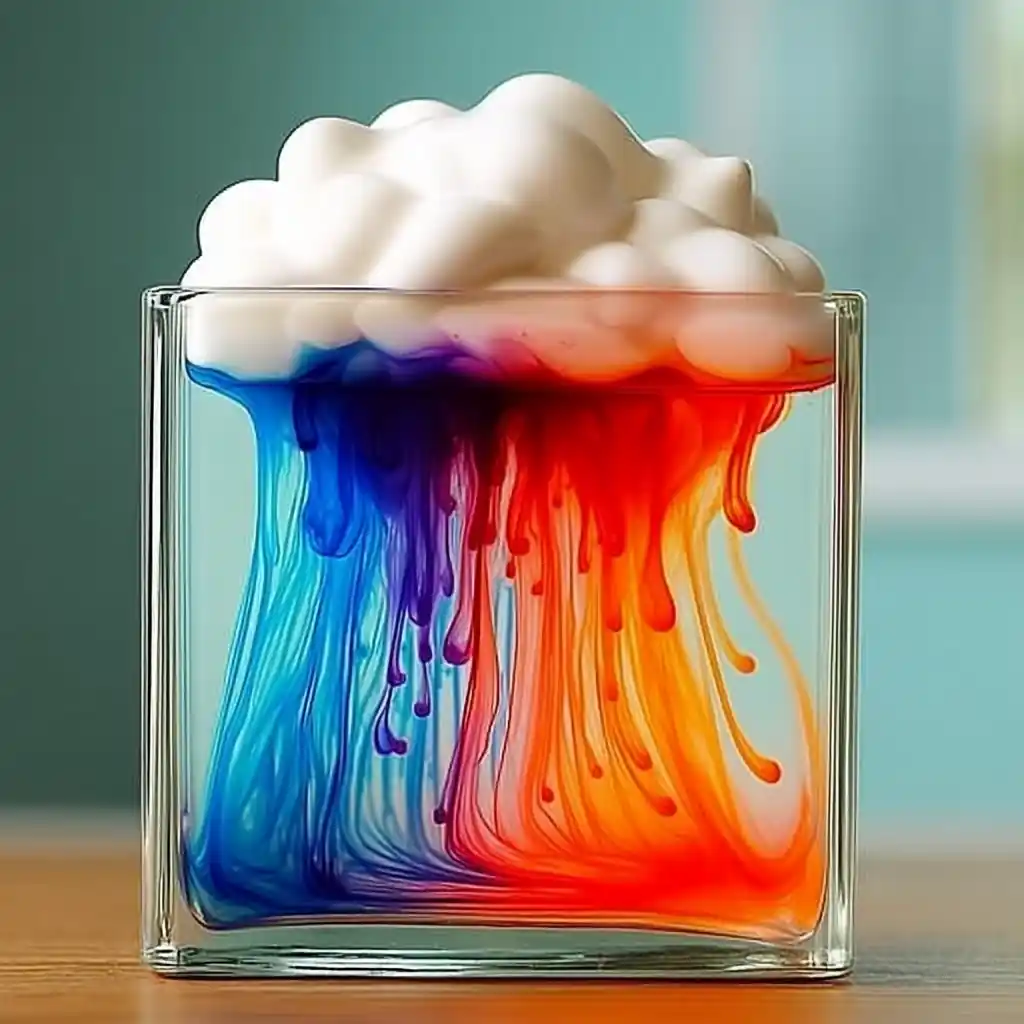
Creative Twists to Try
- Use neon food coloring for extra-bright storm clouds.
- Layer the rain by adding light colors first, then darker tones.
- Change the cloud shape by using less or more shaving cream or swirling it slightly with a spoon.
- Add glitter (very sparingly!) to simulate lightning or magical particles.
This project is flexible enough to accommodate creative ideas. Encourage kids to invent their own weather themes—like a sunset storm, pastel rain, or even a dark and stormy night.
Extend the Science Learning
Use this opportunity to introduce kids to weather vocabulary and phenomena:
- Precipitation: The “rain” that falls through the cloud.
- Cumulus clouds: The fluffy cloud layer made with shaving cream.
- Gravity and saturation: How the cloud holds color until it becomes too heavy to hold any more.
You can also have kids hypothesize what will happen before they begin, and then compare their predictions with the results. Try timing how long it takes the color to break through, or see what happens when more or less shaving cream is used.
Print
Rainbow Rain Cloud in a Jar
- Total Time: 5 minutes
- Yield: 1 experiment
Description
Create a colorful and educational science experiment at home with this Rainbow Rain Cloud in a Jar. Perfect for curious kids and weather-themed activities.
Ingredients
1 clear glass or wide-mouth jar
Water (fill ¾ of the jar)
Foam shaving cream
Food coloring (variety of colors)
Small bowls or cups
Droppers or small spoons
Instructions
Fill the jar with water about ¾ full.
Spray a layer of shaving cream on top of the water to form a cloud.
In separate bowls, mix a few drops of food coloring with a small amount of water.
Use droppers or spoons to gently drop colored water onto the shaving cream cloud.
Watch as the colors break through the cloud and rain into the jar, creating beautiful patterns.
Add more colors or repeat with different variations for more fun!
Notes
Use clear jars for best visibility. Avoid gel shaving cream. Encourage kids to predict what will happen before starting.
- Prep Time: 5 minutes
- Cook Time: 0 minutes
- Category: Educational Activity
- Method: Hands-on Science
- Cuisine: N/A